


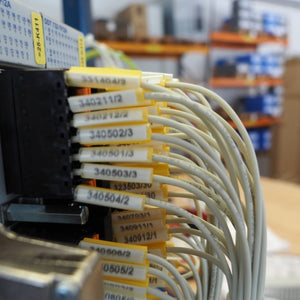

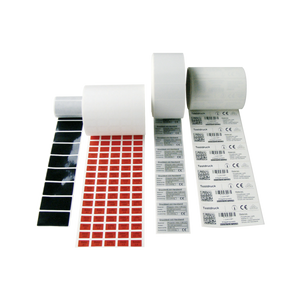
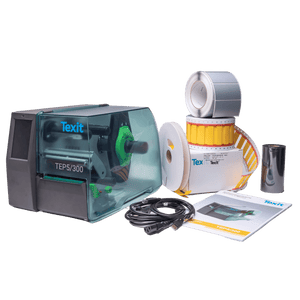

Marking and labeling cables makes installation, maintenance, and troubleshooting easier. Depending on the application, cable labels, heat-shrink markers, cable tags, or other cable identification methods are used to mark cables. The appropriate method of cable identification depends, among other things, on the cable diameter, the installation conditions, and the environmental conditions.
In industrial applications, cable markings should remain legible over time and be sufficiently resistant to typical stresses such as abrasion, moisture, temperature, and chemicals. With the right markings, cables, wires, and conductors can be reliably identified and matched to the technical documentation.
Permanently Mark Cables
Ways to Mark Cables
Various solutions have proven effective for permanent cable marking. Which method or cable marker is most suitable depends primarily on whether the cable is already installed, how much labeling space is needed, and what stresses the marking will be exposed to.
| Method | Suitable for | Is this possible after the cables have been installed? | Advantages |
|---|---|---|---|
| Cable labels | Cables and Wires | Yes | Flexible and quick to use without any tools |
| Labelable heat-shrink tubing | heavily used cables | No | Very sturdy & durable labeling + extra cable protection |
| Cable signs | Cables, Wires, and Cable Bundles | Yes | Large labeling area that is not limited by cable diameter; also available as cable labels without cable ties |
| Wire Markers & Cable Clips | Single strands, wires, and thin conductors | Depending on the product | Suitable for particularly small diameters |
If, in addition to cable labeling, you're also interested in the meaning of cable designations, we have a helpful guide on that topic as well. This guide explains cable designations using clear examples and tables.

Labeling Cables with Cable Labels
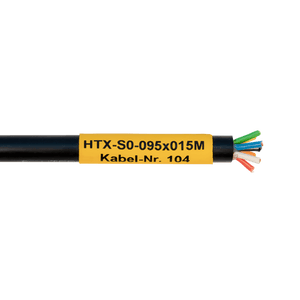
Cable labels are ideal for marking cables. They are made of high-quality plastic and can be printed with a thermal transfer printer or laser printer or marked manually, depending on the item. These cable markers can also be applied to cables that have already been installed and are a quick and cost-effective solution for cable markings.
Some labels also have a protective laminate that protects the labeling. The disadvantage of cable labels is that the space for the marking depends on the cable diameter.

Labeling Cables with Heat-Shrink Tubing
Cable marking with shrink sleeves is a very common method of cable marking in industry. This requires special shrink sleeve markers that can be printed with a thermal transfer printer. As a manufacturer of shrink sleeve markers, you benefit from Texit's top product quality and manufacturing expertise.
Shrink sleeves are particularly suitable for cable marking when the cables are exposed to high loads. However, bear in mind that shrink sleeve markers can only be applied before the cables are installed.

Marking Cables with a Cable Marker
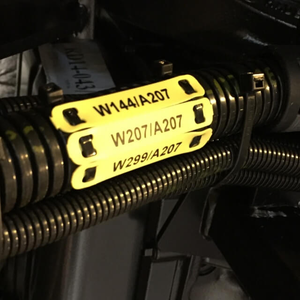
Marking cables using cable labels and cable ties is also one of the most common methods of cable labeling. These cable identifiers are made of plastic (or stainless steel for extreme conditions) and are available in various sizes.
Depending on the product, the labels can be printed using a thermal transfer printer or labeled by hand. They are then attached to the cables using cable ties. This method therefore also makes it possible to mark cables and lines that have already been installed. In addition, the writing field is not necessarily limited by the cable diameter.

Marking Wires and Thin Cables
You need particularly small cable markers to mark individual cores and wires. This type of cable labeling is usually done using cable markers that can be slid or threaded on. These markers have a small diameter and are often used in control cabinets, for example.
Cable clips are another item in this area. These can also be clipped onto thin cables and wires. Most wire labeling products can still be used after installation. They are easy to use and can be used to mark cables.
Which cable marker is best suited for which application?
| Use Case | Appropriate cable marker |
|---|---|
| Pre-installed cables | Cable labels and cable tags |
| Cables that are subjected to heavy mechanical stress | Stainless SteelHeat-Shrink Tubing Markers and Cable Tags |
| Single wires and thin cables, e.g., in a control cabinet | Core identification |
| A larger labeling area is required | Cable signs |
| Quick, retroactive cable labeling | Cable labels |
Mark cables in color
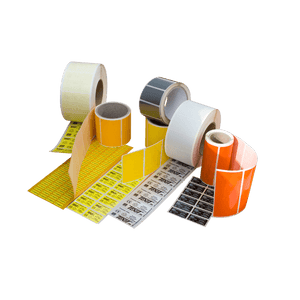
In many areas of industry, not only the type of cable assembly but also certain colored cable markings are prescribed. The use of colored markings prevents cable mix-ups and thus contributes to safety during maintenance work. The most common colors for cable marking in the industrial sector are white and yellow, and silver is also frequently used for cable marking. Labels are also frequently used in blue, red or yellow or with protective film in transparent.
Thanks to the colors, electrical engineers can locate connections more quickly and get a better overview of the entire installation (improving visibility and providing a clearer picture of the system). Colored cable markers can also be helpful for labeling control panels.
As a manufacturer of cable markers, we can also supply you with different colored cable markers, depending on your requirements. You can specify the desired color for all our articles, even if we do not carry them in our standard product range. Our experts will be happy to provide you with a quote for colored cable markers. These are then manufactured especially for you in our production facility. Color plays a particularly important role in single wire identification or in switch cabinet construction. You can find more information about our custom-made products on our service page.
You can select suitable products from the various categories in our online store using a variety of filters (material (polyester, PVC, vinyl, film, fabric or clips), properties, brand, self-labeling or printed markers) and add them to your shopping cart.
Advice on Cable Labeling
As the topic of cable marking is very individual and a suitable printing system must be put together according to requirements, we will be happy to advise you individually and free of charge. Our trained experts in the field of cable labeling have a lot of experience and will help you with your problem and put together a suitable selection of cable labels and cable markers including label printers. Not only existing partners benefit from our service, but also you as an interested party. You can test samples of almost all products from our range at your premises free of charge and without obligation. Convince yourself of the Texit quality of cable marking.
Our team of experts will be happy to answer any questions you may have and arrange appointments at your premises. Get in touch with us quickly and easily (by e-mail, phone or via our contact form) - we make your labeling easy!
About the author
Get to know the author Steffen Rother:

I have been fascinated by electronics from an early age. I gained practical experience as a radio and television technician as a teenager and then came into contact with mechanical engineering for the first time while studying industrial engineering.
I am fascinated by the complexity and diversity in the industry. At Texit, we therefore not only pay attention to the final requirements of our customers, such as permanent legibility, but also to the assembly effort, because time is money. This is just as important for our large customers as it is for our small ones.
Still have questions about cable marking? Simply get in touch with us!
Frequently asked questions
FAQ Mark cable
How can I label cables?
How can I label cables?
Cables should be marked so that they are clearly identifiable and permanently legible. Depending on the application, cable labels, heat-shrink tubing markers, cable tags, or wire markers or clips are suitable for this purpose. The cable marking method used should be appropriate for the installation method, the cable, and the specific environmental conditions.
How can you mark cables?
How can you mark cables?
There are many ways to mark cables. In the industry, these 4 options for cable marking have become particularly popular:
1. shrink tubing (sleeves)
A printable shrink sleeve that is pushed over the cable and shrunk by heat so that it fits tightly.
2. cable labels
Small signs made of plastic, metal or aluminum, which are labeled and attached to the cable with cable ties.
3. cable labels or flags
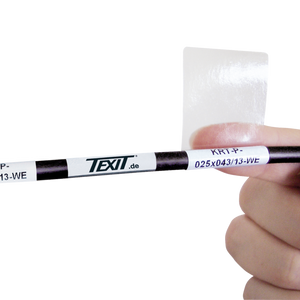
Self-adhesive labels that are stuck directly onto the cable and have an integrated laminate film (transparent) that is wrapped around the label for protection.
4. wire identification
Clips, colored rings or push-on markers that identify individual wires.
In industry, cable markings usually have to withstand very high loads and still be legible years later. The methods mentioned above have proven to be the most suitable for these high requirements.
How do you organize cables?
How do you organize cables?
Cables can be easily organized by bundling individual cables. Organizing by bundling is particularly quick and easy with cable ties. Tip: Be careful not to pull the cable ties too tightly so as not to damage the cables.
Alternatively, insulating tape or Velcro strips can also be used for bundling. If you want to attach cables to the wall, cable clamps are particularly suitable. And if you want to hide cables visually, cable boxes are the best option.
How can I color-code cables that have already been installed?
How can I color-code cables that have already been installed?
For cables that have already been installed, it is important that the cable markers do not have to be pushed onto or threaded onto the cables and wires. This limits the choice of cable labeling somewhat. However, there are still many products that are suitable for this type of labeling.
Particularly noteworthy here are cable labels that are mounted with cable ties or cable labels that are stuck directly onto the cable. For small cable diameters, cable clips are particularly suitable for labeling cables that have already been installed. As an assembly aid, these are supplied already printed on an assembly rod and can simply be clipped onto the wires.
How can I mark cables outdoors?
How can I mark cables outdoors?
Outdoor cables are exposed to particular environmental influences. These include, above all, moisture, rain, UV radiation, abrasion and, depending on the location, salt water. To mark these cables, you therefore need markings that are highly resistant in these areas.
At Texit, we have many products that are suitable for this marking. You can find more product information on the relevant product pages, and you can ask us for prices per item at any time.
What types of cable markers are available?
What types of cable markers are available?
Common cable identification methods include cable labels, heat-shrink tubing markers, cable tags, and identification solutions for individual wires. They differ primarily in terms of installation method, labeling area, and durability.
Can you print on cable markers yourself?
Can you print on cable markers yourself?
Yes. Depending on the product, cable labels can be printed using thermal transfer or laser printers, for example. Alternatively, there are also solutions that can be labeled by hand. At Texit, we also offer cable labels with custom printing as part of our printing service.